







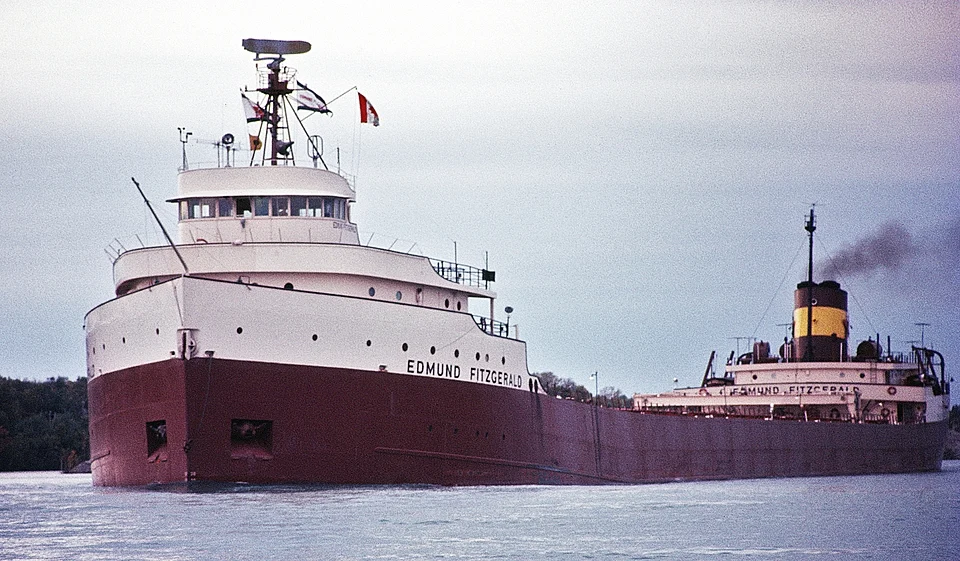
On November 10, 1975, the Edmund Fitzgerald sank in Lake Superior during a fierce storm, taking all 29 crew members with her. The tragedy remains the last major Great Lakes freighter lost with all hands and has become a touchstone in maritime history. Each anniversary brings renewed reflection not only on the Fitzgerald itself but also on other modern shipwrecks that remind us of the sea’s enduring dangers.
In 1980, the British bulk carrier MV Derbyshire went down in the Pacific Ocean during a typhoon, killing all 44 crew members. Investigators later pointed to structural weaknesses in hatch covers, a haunting parallel to the Fitzgerald’s suspected vulnerabilities. Seven years later, the Philippine ferry Doña Paz collided with an oil tanker, igniting a catastrophic fire. With more than 4,000 lives lost, it remains the deadliest peacetime maritime disaster on record. In 1994, the MS Estonia sank in the Baltic Sea after its bow visor failed in heavy seas, claiming 852 lives and prompting sweeping reforms in passenger ferry safety. More recently, South Korea’s MV Sewol capsized in 2014, killing 304 people, many of them schoolchildren. The disaster exposed negligence in evacuation procedures and sparked national outrage. Just a year later, the American cargo ship El Faro was lost near the Bahamas during Hurricane Joaquin, with all 33 crew members perishing after the vessel sailed into extreme weather.
These tragedies underscore recurring themes: the power of storms, the consequences of structural failures, and the human errors that can turn peril into catastrophe. Yet they also mark turning points in maritime safety. Stricter international standards now govern ship design and inspection. Satellite forecasting and GPS tracking provide captains with real-time data to avoid dangerous routes. Emergency beacons and communication systems ensure vessels rarely vanish without a trace. Passenger ferries are subject to tighter regulations on evacuation drills and capacity limits, while global conventions such as SOLAS continue to evolve in response to lessons learned.
The Edmund Fitzgerald remains a haunting symbol of the Great Lakes, immortalized in song and memory. But its story is part of a larger narrative of modern shipwrecks across the world. Each loss has carried lessons forward, shaping a safer future for those who continue to sail.
Photo credit: from Wikipedia Commons CC BY-SA 3.0